Thriller
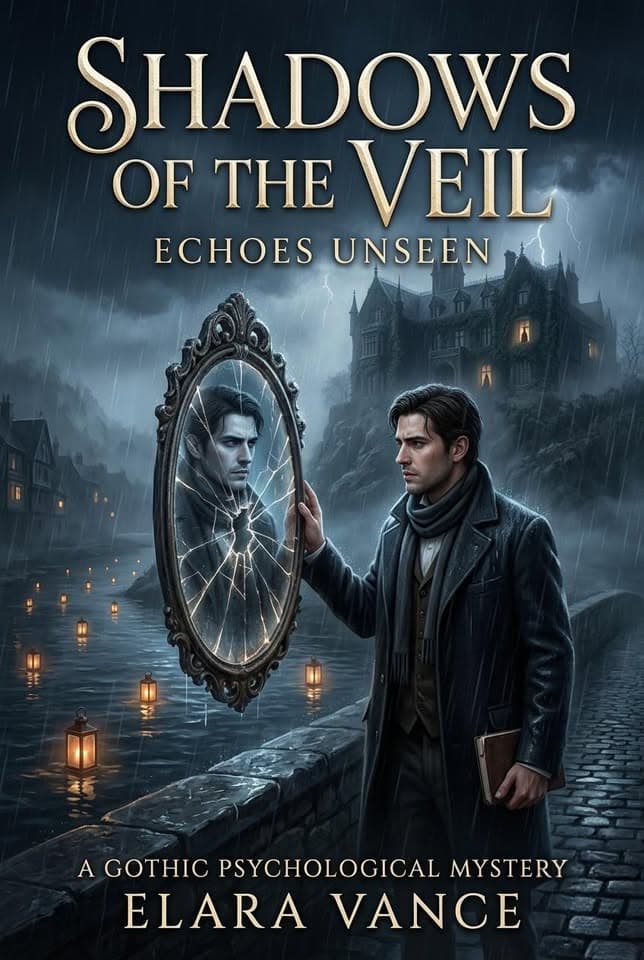
Shadows of the Veil
Secure payment • Instant access • DRM-free
Rate this novel
The story builds through subtle, layered breadcrumbs—unexplained lapses, sharper handwriting, knowing reflections, inherited "voices," shifting tones in speech or poetry, and thematic motifs of veils, echoes, scars, and mirrors—without naming or revealing the core fracture. Readers sense mounting wrongness through Elias's limited, unreliable lens, with hints gaining weight only in hindsight, much like classic psychological tales where dissonance feels atmospheric until the storm breaks. The lore remains veiled as family eccentricity and folklore, the "other" presence foreshadowed indirectly via symbols, dialogue asides, and internal dissonances. This sets up deeper revelations in later parts while delivering a novel-length arc of character depth, emotional resonance, and intellectual inquiry into identity and hidden selves.